Search results: 78

Page: 1 2 ()

This course contains essential information you will need before you start using the National Adult Medication                  Chart.                                                                                                                                                                     

Category: A-G

This course provides information about using the Fisher & Paykel Airvo2 Oxygen delivery device

Category: A-G

This course shell provided access to a separate site: ASCIA Allergy and Anaphylaxis for Health Professionals

ASCIA allergy and anaphylaxis e-training for health professionals (HP) has been developed by the Australasian Society of Clinical Immunology and Allergy (ASCIA) to provide ready access to reliable allergy and anaphylaxis education for health professionals throughout Australia and New Zealand, at no charge.


Development of ASCIA allergy and anaphylaxis e-training HP has included an extensive review process which involved ASCIA members as well as representatives from other medical organisations throughout Australasia.

Category: A-G

This course contains information on the new Badgernet-CTG interface functionality

Intended participants: Registered Midwives and Obstetricians providing care to women in labour at Puawai Aroha Maternity Unit in Gisborne.


Category: A-G

This module covers basic life support requirements within the Hauora Tairawhiti hospital setting. By completing this module you will be prepared to attend a BLS skills assessment workshop.


You must complete the online training annually and your skills assessment every 2 years.

The participant will learn more about rhythm recognition. The course is intended for any audience that needs to care for monitored patients. 

The competency is associated with correctly recognising images of rhythms on the monitor - or off the printouts. Four basic cardiac rhythms are covered.

  • Normal sinus rhythm
  • Atrial arrhythmias
  • Ventricular arrhythmias
  • Heart blocks

Category: A-G

This course is designed to give some basic and clear information to staff working in the health care sector around the COVID-19 virus, in particular; 

  • What is COVID-19
  • The New Zealand Context
  • Symptoms of COVID and how it is spread
  • Protection of self and others
  • Infection Prevention Measures
Professional Development Hours: 0.5 hrs

Category: A-G
Who for Nurses and other clinical staff
About Skills and techniques for the prevention, detection and nursing management of delirium
Level / type Level 5 Short course
Pre-requisite
Category: A-G

This course provides an introduction to the anatomy and physiology of the normal swallow. 

This is a precursor for the next Dysphagia course and training for the Nurses Acute Stroke Swallow Screen. 

Audience

This course is for nursing staff who work with the adult population

Time allocation
10-15 minutes

Category: A-G

This course provides an introduction to the anatomy and physiology of the normal swallow and explores what can go wrong with a patient's swallow (dysphagia) following a stroke.

This course should be completed as a pre-requisite to undertaking the nurse dysphagia screening course to train as a nurse dysphagia screener or it can be completed as a standalone course to learn more about dysphagia.

Audience
This course is for nursing staff who work with the adult population

Time allocation
10-15 minutes

Category: A-G

Whakaminenga / Who is this for:  kaimahi working at Te Whatu Ora Tairāwhiti.
Prerequisites: none
Frequency: once
About: 
This course has three modules
  • Generic falls prevention: a basic introduction to Falls Prevention and how to keep yourself safe & prevent falls both in your home & work life
  • Clinical falls prevention: what should be done to prevent patient falls and the reporting processes around these
  • Introduction to the Fracture Liaison Service

Whakaminenga / Who is this for:  kaimahi working at Te Whatu Ora Tairāwhiti.
Prerequisites: none
Frequency: every two years
About: 
In your district there are systems and processes in place to help keep you safe in the event of a fire. As a staff member you are part of these processes so it is important that you know what to do and can act immediately should you hear a fire alarm or see a fire in your area.


This course consists of modules that are aimed to assist all staff from all disciplines to achieve an understanding of stroke, and the impacts on the patient/ family and community.

The course also contains basic nursing skills guidance such as how to perform the Glasgow Coma Scale and more advanced skills for nurses involved with thrombolysis of an ischaemic stroke patient

This course is worth 2 hours of Professional Development time.


Category: N-S


Allied health is a large diverse group of registered and non registered allied health staff. To ensure that as many people as possible benefit from input from the allied health team registered staff will delegate some tasks to non registered staff. It is essential to maintain high quality treatment no matter who is delivering the treatment and to keep service users safe. To achieve these two goals staff need to be aware of how to delegate, when to delegate, when not to delegate, when not to accept a task, and what responsibilities are associated with delegated tasks.
Audience
Allied Health Assistants  beginning work at Te Whatu Ora - Te Tai Tokerau.
Frequency
Within 6 weeks of employment at Te Whatu Ora - Te Tai Tokerau
Time allocation
30 minutes

Category: A-G

Please create an account and complete the syringe driver training.

This course mandatory is for any Tairāwhiti staff that will be required to updated patient demographic information.

All Tairāwhiti staff who need access to i.PM Referrals are required to complete this course before they get access to this function in i.PM.


All Tairāwhiti staff who need view only access to i.PM, are required to complete this course before they get access to i.PM.


This module has been created to ensure consistent safe and competent IDC of adult males across the region. Staff who with in their normal duties would be expected to perform male catheterisations should complete this as a first step in gaining clinical competency. This module is a prerequisite for a Male Indwelling catheterisation (IDCm) skill simulation session.

This course is equivalent to 4 hours of Professional Development time

logo
Category: H-M

Whakaminenga / Who is this forclinical kaimahi working at Te Whatu Ora Tairāwhiti.
Prerequisites: none
Frequency: annually for clinical staff
Course contact: susan.egan@tdh.org.nz
About: 
This course gives you the skills and knowledge to be able to apply infection prevention principles and practices in your care delivery processes to protect yourself and your patients in a healthcare setting.

Who for Nursing staff
About Workbook
Contact  
Category: H-M
Who for Nursing staff
About This is the theoretical component of Central Venous Access Devices certification and is a prerequisite for the workshop.
Contact  
Category: H-M

This course outlines the skills, knowledge and techniques for practice requirements necessary for attaining competency. The term venipuncture in this context refers to the puncturing of a vein for any medical purpose, e.g. to take blood, to feed somebody intravenously, or to administer a drug.

  • The IV Cannulation component is worth 2 hours of Professional Development time
  • The Phlebotomy Training component is worth 2 hours of Professional Development time

Category: H-M
Who for All nurses, midwives and anaesthetic technicians (including students)
About This course covers the theoretical component of Generic IV Therapy cerification for Hauora Tairawhiti DHB.
Contact  
Category: H-M
Who for:  All Midwives
About: This is a compulsory annual course. The Combined Emergency Skills Day comprises Maternal Resuscitation (at the standard of Level 4 of the NZRC framework) and Neonatal Resuscitation updates, and childbirth emergency skills (bleeding emergencies, shoulder dystocia, breech, severe hypertension in pregnancy, sepsis and cord prolapse).
Level / type

Level 4 course

Category: H-M

Whakaminenga / Who is this for: Registered nurses, midwives and allied health staff new to HNZ Tairawhiti
Prerequisites: Nil
Frequency: Once only
About: An orientation program that provides new staff the opportunity to become familiar with the process at HNZ Tairawhiti as well as to complete the mandatory training requirements.

Whakaminenga / Who is this for:  Kaimahi [new and existing employees] working at Te Whatu Ora Tairāwhiti.

Frequency
  • Pōhiri - Once when you first join the organisation
  • Cultural Safety Training - When you first join the organisation and every 3 years after
About: 

Our monthly pōhiri welcomes kaimahi [new employees] joining Te Whatu Ora Tairāwhiti. We seek to engage kaimahi in Māori culture values, and the importance of cultural competence and safety in our workplace. 

This training addresses cultural responsiveness through understanding individuals, whānau and their whakapapa, utilising a Māori model of health. It demystifies giving clear understanding to Te Wakaminenga, Declaration of Independence 1935, and Te Tiriti O Waitangi 1940, while also assisting with a safe transition and application into the workplace. The values of Tikanga will be explored.   


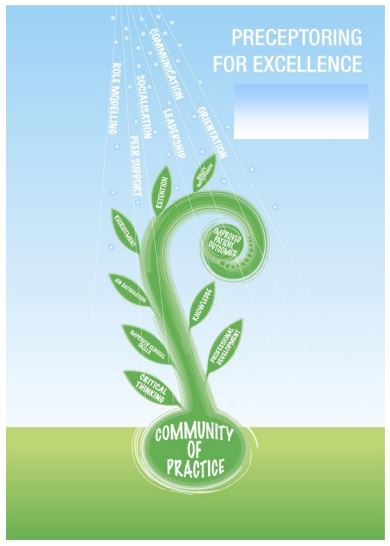
Welcome to the Preceptor training online learning package! Thank you for progressing to be a preceptor in your workplace. Developing new team members is one of the most valuable duties you can do. This course is designed to give the basic skills to work effectively with a new staff member, supporting them to grow and develop in your workplace. 


Category: N-S

Learning Outcomes:

  1. An understanding of eligibility to engage in the appropriate PSA salary progression

  2. An understanding of the process and obligations of both the employee and manager

  3. An understanding of how to write the objectives

Where to find the paperwork and some examples? 

Paperwork: 

Examples: 

Category: N-S

This training provides you with the knowledge on how to assess a person’s need for basic long term equipment and identify the appropriate piece of equipment.

Who is this for: Occupational Therapists, Physiotherapists, Social Workers, District Nurses, Health Care Assistants and Allied Health Assistants

Time: 1-2 hours


Category: N-S

Whakaminenga / Who is this for: Registered Nurses
Prerequisites: Complete the online Ko Awatea Tairawhiti Dysphagia ll module
Frequency: Once only
About: This workshop is for registered nurses working with acute stroke patients and covers the anatomy & physiology of normal swallowing, dysphagia following stroke and how to administer the nurses acute stroke swallow screen.

Whakaminenga / Who is this for: Registered Nurses
Prerequisites: Please complete the Basic Life Support eLearning module before booking on this course.
Frequency: Annually
About: To develop and endorse skills in CPR

About this course:

Beyond Borderline is a 3-day workshop on providing emotional regulation for individuals with personality disorders.

This training is recommended for registered nurses, clinical psychologist, therapist and doctors

Prerequisites: none
Frequency: once

Whakaminenga / Who is this for: Healthcare Professionals
Prerequisites: Pre reading
Frequency: Two yearly
About: Immediate management of cardiac Arrest

Whakaminenga / Who is this for: For healthcare professionals working with acute cardiac patients.
Prerequisites: None
Frequency: Once only
About: 

This course provides an overview to cardiac anatomy and physiology, ECG interpretation, Acute coronary syndrome medications, cardioversion and pacing.

Whakaminenga / Who is this for: Registered nurses
Prerequisites: Indwelling male catheterisation - Ko Awatea
Frequency: Once only
About: This workshop is designed to teach registered nurses the skill of female, male and suprapubic catheterisation

Whakaminenga / Who is this for: Tairawhiti Registered Nurses
Prerequisites: Tairawhiti Infusion therapy - Central venous access devices Ko Awatea modue
Frequency: Once only
About: This is a practical workshop designed to educate registered nurses in the management of CVAD devices.

Whakaminenga / Who is this for: All staff who are involved with caring for patients requiring close care observations. 
Frequency: Once
About: Fundamentals of close care observations - communication, responsibilities, documentation and safety requirements. 
Page: 1 2 ()