Search results: 559

Page: () 1 2 3 4 5 6 7 8 9 10 11 12 ()

Who this course is for: Auckland DHB Mental Health leaders who have completed the course "Building a Just Culture – Just Culture Training for Managers"

Time allocation: 1 hour


We are running focus groups specifically for Mental Health Leaders to understand your successes and challenges in applying Just Culture in your day-to-day practices so that we can better support you.  

We will also provide you with a tool to assist in having great 1-1 conversations with direct reports that help build psychological safety which is critical for building a Just Culture.


Category: General

As part of A Tiriti and Equity journey, we will be delivering training for all of our senior leadership group in MH&A.

As this is a core part of the work programme over the next 12-18 months, everyone in the leadership group will be expected to attend all trainings.

The first two trainings will both occur in April – May 2021 to help provide a solid foundation for the next steps in the following months.

The drive is to ensure that we mental health addictions workers become greater ambassador /representatives of our product that we deliver to our community.  Therefore, the  more equipped we are in the concept and practice of whanāungātanga the better we become in engaging processes, with our communities and the people we serve. 

To ensure that the right people are able to operationalize the Te Tiriti and Equity Journey here is the group that the training is for: Director Leadership Team, Human Resources business partner, Services Clinical Directors, operations Managers, Nurse Unit Managers, Clinical Team Leaders, Allied Health Professional Leaders, Allied Health Practice Supervisors, Nurse practitioners, Nurse consultants, Nurse Educators, Whānau Advisor and Consumer Advisor Leader, Data Analyst, Project Managers, Clinical Co-ordinators and Lead Clinicians.

This is training for keyworkers who have service users with emotion dysregulation on their caseload.

Training will be based on DBT principles and includes learning about DBT, some skills and brief interventions.

The training runs over two days and must be attended in full in order to receive a certificate of attendance.

HoNOS 65+ is a validated, research based tool for collecting  information about health indicators for older adults.  Here you will learn how to accurately use the HoNOS 65+ tool to create appropriate scoring and apply it to clinical practice.  The course will teach you how to measure a service users progress by interpreting the results within your service specific clinical setting.

About:  This training is mandatory for all MH&A registered nurses, allied health & medical staff. All staff should attend 2 yearly updates.
Who is this for:  
Prerequisites:  
Frequency:  2 yearly
Time:  
Course contact:  Nadine Lake


Just Culture training is being offered to leaders in the Mental Health Directorate who do not have direct reports and so are ineligible for the DHB wide training. This is aimed at those in roles of: Lead Clinician, Practice Supervisor, Clinical Coordinator, Nurse Educator, Nurse Consultant.

This study day is for mental health assistants & rehabilitation workers in inpatient settings. The course covers various topics including communication, documentation, cultural awareness and healthcare assistant policy.

This study day allows Nursing and Allied Health staff an opportunity to refresh and gain knowledge and skills when caring for service users, from a medication and pharmacology perspective.

This training is for all MH&A registered nurses in all inpatient settings.

Kia ora! The overall aim of this course is to learn some foundational skills to be rainbow responsive in the mental health support we provide.

This training will cover the following topics:

  • A brief history of the community
  • An overview of key terminology 
  • Cultural considerations for an Aotearoa context
  • The Rainbow community and mental health
  • Reflections on societal norms and biases
  • How to signal safety and allyship
  • Being rainbow-responsive in practice

Risk assessment training is designed to teach participants skills in assessing service users’ risk of harm to themselves and others, the level of that risk, how to formulate a plan to promote their safety and that of others, as well as how to effectively communicate this to the service user, their whanau, and to other clinicians in writing.  It is a mandatory training for new and experienced clinicians, as it is to be attended every two years.


This training is for all MH&A registered nurses in all inpatient settings who are undertaking or are planning to undertake the role of shift coordinator.

Supporting clinicians in secondary services to develop practical skills for working with whānau.

About: 
Who is this for:  
Prerequisites:  
Frequency: 
Time:  
Course contact:  


Welcome to the Safe practice and effective communication initial four day training.  Here you will learn the core principles and fundamental skills of communication, de-escalation and trauma informed care.  On completion of this course, you will be equipped with the knowledge, skills and techniques required to successfully communicate and/or de-escalate a distressed service user, in a manner which is safe, caring and compassionate.  Staff attending this course will have increased awareness of the psychological and physical harm that can be caused by coercive practice, restraint and/or seclusion.  Staff that attend this course will be taught techniques to break-away from dangerous or compromising situations.  Staff attending this course will also be taught how to keep a service user and themselves safe, in the unfortunate event that all other options have failed and a service user requires restraint to contain an imminently dangerous or high risk behaviour.          

Welcome to the Safe practice effective communication one day update.  Here you will revise and consolidate your skills for communication, de-escalation and trauma informed care.  At the end of this day, you will feel increased confidence in your ability to communicate effectively and de-escalate a service user in a state of distress.  In the unfortunate event that a service user requires restraint, to contain an imminently high risk behaviour, you will be able to perform the techniques in a safe and respectful manner that is likely to minimise the chance of any harm to staff or service users.        


The Stepped Care training sessions aim to give a brief outline of particular topics and to develop skills in the these areas.


The Stepped Care training sessions aim to give a brief outline of particular topics and to develop skills in these areas.

This session will cover the following topics:

  • Medication Management presented by Dr Nick Hoeh
  • Sleep Hygiene presented by Simon Stebbings
  • Smoking Cessation presented by Teia Ward

There will be time for discussion at the end of each topic.


For staff that have not done our workshop this 1 day training will provide them with extra skills and support to implement the Supporting Parents Healthy Children Guidelines in to their work.  We will be looking at the impact of parental mental health issues on parents, parenting and children, discuss expectations of staff and look at practical skills to increase participant’s confidence in starting conversations about parenting. The workshop will be open to ADHB staff working in the area as well as staff at Ember Korowai Takitini (formerly Connect Supporting Recovery).


Uploading your completed audit form constitutes a legal statement that you have demonstrated your ability satisfactorily.

In due course, the course Tutor will confirm this and award you a PASS (10/10)


Category: Other

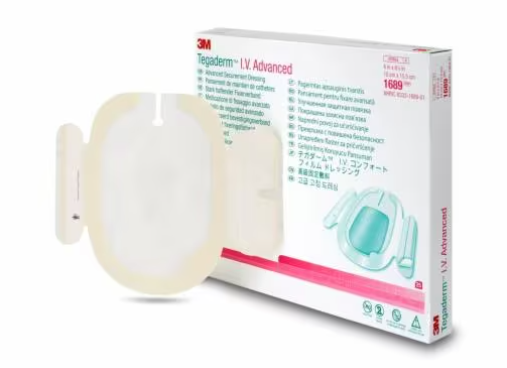
Kia ora, welcome to the Midline Dressing Change Skill Validation Course for Te Toka Tumai Auckland. This course is for all Te Toka Tumai Auckland staff who manage Midline dressings in their clinical role.

Kia ora, welcome to the Midline Management Skill Validation Course for Te Toka Tumai Auckland. This course is for all Te Toka Tumai Auckland staff who manage Midlines in their clinical role.

Independence in providing Midline care at Te Toka Tumai Auckland requires sequential completion of courses:

  • Midlines Theory (worth 30 minutes of Professional Development time)
  • All relevant Skill Validations

Kia ora, welcome to the Midline Removal Skill Validation Course for Te Toka Tumai Auckland. This course is for all Te Toka Tumai Auckland staff who remove Midlines in their clinical role.

By the end of this course, the learner will be able to:

  • Describe clinical indications for the insertion of a Midline
  • Outline the assessment and management required for a Midline
  • State potential complications related to Midlines

Category: General

Kia ora, welcome to the Midlines course for Te Toka Tumai - Auckland. This course is designed to provide an overview of managing Midlines.

Each module within this course is worth CPE, as are the associated skill validations.

Category: General
Mā wai tēnei | Who is this for:
This is for midwives and doctors who wish to use muka tītiki to tie off an umbilicus on a newborn.
Takawā | Time: 
30 minutes
About:
You will learn how to discuss the significance of using muka tītiki with whānau, and safely double-tie an umbilical cord with a muka tītiki.
Contact:
Beatle Treadwell (ADHB) BeatriceT@adhb.govt.nz
Frequency:
Complete once, repeating will refresh knowledge but not update your verified record.
Category: Womens Health

This quiz will help Auckland DHB HR professionals test their knowledge about the contents of myHR on the intranet.

Category: General

Uploading your completed audit form constitutes a legal statement that you have demonstrated your ability satisfactorily.

In due course, the course Tutor will confirm this and award you a PASS (10/10)


Category: Other

Target audience: Neonatal Paediatric
Time allocation: approx. 1 hour
Completion criteria: complete ALL mandatory activities (refer to Course Completion Status block on the right)
Contact: Email us MCIS@adhb.govt.nz

This framework is currently in testing. If you have been asked to test this framework please enter the enrolment key provided to you under "Self Enrolment (Testers)".

If you do no the enrolment key, please contact Natalie Rees.

Kia Ora & Welcome, 
This course is developed to enable new & existing healthcare professionals to understand the standards expected for assessing adult patients using the Glasgow Coma Score (GCS), within Ward 83 Neurosurgery Department. 
Neurosurgery uses Neuro Adult Vital Signs Chart CR5840, these 2 separate tools (GCS & EWS) combined one page are measured separately & not graded together.  GCS measures the decrease in consciousness, scores from each section of the scale are useful for describing disruptions in the nervous system & help providers track changes.  

Teasdale & Jennett (1974) describe the GCS scale as an assessment of coma & impaired consciousness as a way to communicate altered levels of consciousness (LOC) with patients with an acute brain injury.

The GCS scale guide helps measure and monitor trends using three key modes of behaviours (eye, verbal, motor) & their responses with a minimum GCS of 3 & total GCS of 15.  


In comparison to Te Toka Tumai wards use NZEWS Adult Vital Signs chart.  This system uses a the Alert, Voice, Pain, Unresponsive (AVPU) scale which is taught to healthcare professionals & first aiders how to record the patients LOC.  

Using a tick √ instead of a or χ to graph as to track & trace a trend GCS example above


Where as GCS is measuring higher brain functioning for best response & graphing a trend - in conjunction with Pupil assessment & limb strength. 

Neuro Vital Signs Chart CR5840 (clinical forms) can also be used as a resource outside this department, please contact Ward 83 Neurosurgery Department for Te Toka Tumai Auckland for questions.   

All other wards for suspected Falls please ref to clinical forms for Adult Observation Chart CR5782A & use this Neuro Obs Chart.

You may also wish to refresh your Neuro assessment skills with further learning, refer to Clinical Assessment e Learn module to complement Neuro Obs skills. 

E noho rā & Goodbye 

Category: Neurology

Mā wai tēnei | Who is this for: All staff at Te Toka Tumai Auckland - specific to mental health & addictions staff (working in the Kāhui o te Ihi Directorate at Te Toka Tumai Auckland)

Takawā | Time: 7 hours

Course contact: Aaryn Niuapu, Lived Experience Director

Method: Face to face

Frequency: Once


About this course: In this course you will learn the key principals of how to recognise, escalate and respond to patient deterioration within Non NZ Early warning Score areas. Such areas may include dialysis units, radiotherapy units, outpatient clinics and community based settings.

Staff will:

  • Measure vital signs and use them to help decide how urgently to escalate a patient's care
  • Identify when and how to seek help


This course for any nurse working with adults who is interested in learning more about swallowing, swallowing disorders, and tips on helping dependent feeders. This course is also the first step in completing training for the Nurse Dysphagia Screen.

Category: General

You're invited to join us for the Nursing Forums of 2021.  These forums will be hosted by our Nurse Directors and their expert knowledge guests and will be supported by Manawa Awhi| Nursing Development Unit.

Every day we care for patients with compassion and professionalism.  Some of our more vulnerable patients need extra support.  To help us all deliver best practice and keep up to date with the latest evidence we are making this our focus for 2021.

Every month we will focus on a different aspect from this patient group.  We'll be sharing the most up to date guidance and research, sharing good practice from teams and individualswith each month hosted by a different set of panelists.

The forums are open to all nurses and any other professionals with an interest in the topic.  Attendance and completion of a short quiz afterwards will even earn you CPE credits (more details on this will be shared during the forum).

Attend in person, or zoom in from the comfort of wherever you are.

Can't watch it live? Recordings of the forums will be made available on this page, after the event.


Category: Forums

Kia ora! 

Each time a handover occurs there is an associated risk to the patient/service user. This policy outlines the accountability, best practice principles of handover, expected standards and structure for handover at Auckland DHB.


The expectations of this course are that you will: 

  • read the policy 
  • access any resource page(s) on Hippo 
  • review your handover process against the standards expected
  • complete the self-evaluation section  - this acknowledges that you have read the policy/guideline and have had an opportunity to discuss any questions you have with your preceptor/nurse educator or manager 


Kia ora! 

The purpose of this policy is to ensure that Auckland District Health Board's (Auckland DHB) expectations are met regarding nursing documentation for all patients (excluding Mental Health and Addictions) within Auckland DHB.


The clinical record holds entries by all healthcare providers contributing to the care of the patient. Nursing documentation contributes to this, providing a record of the care provided and evaluation of that care, including use of the associated clinical-record charts and forms.


The expectations of this course are that you will: 

  • read the policy 
  • access any resource page(s) on Hippo 
  • review your documentation against the standards expected - use the education tool as a guide 
  • complete the self-evaluation section  - this acknowledges that you have read the policy/guideline and have had an opportunity to discuss any questions you have with your preceptor/nurse educator or manager 


The overall aim of this page is to provide nurses new to Te Toka Tumai Auckland with access to all the Ko Awatea resources they may need to familiarise themselves with to practice safely.

It is a medico-legal and professional expectation that the Mental Health nurse will dispense and administer prescribed medication to the service user in a safe, timely, accurate and patient centered manner.

This course has been complied to provide the necessary information and guidance to promote your best nursing practice. It comprises of a medication generic test, followed by a practical ward assessment with your nurse educator.

Category: Mental Health


Who

Level 3 Specialist .i.e. Midwives and Nurses & Level 4 Expert .i.e. Lactation Consultants and others who may work with lactating people i.e. speech language therapists & childbirth educators  

What

The Baby Friendly Initiative, requires 1 hour of education on Breastfeeding for Māori to increase our understanding and awareness of traditional whangai ū /breastfeeding practices and the effects of colonisation.  All level 3 & 4 staff on start of employment are to complete this online module and then every 30 min of "Breastfeeding for Māori" every 3 years, as part of "The 10 Steps to Successful Breastfeeding" and the Baby Friendly Hospital Initiative.

Time

Two hours of education will be added to your training record

Requirement to   complete

Once or as needed

Category: Womens Health

Target Audience: Clinical staff requiring an Advanced Life Support Course as per the Te Toka Tumai Patient Deterioration Recognition and Response Training Pathways

Self-directed Learning: Three Weeks (minimum)

Duration: 9 Hrs Face to Face training (approximately)

Assessment: Yes – Knowledge quiz and practical skills assessment

About this course: The New Zealand Resuscitation Council (NZRC) CORE Advanced course is for the advanced rescuer who is expected to manage and supervise resuscitation events.


If you are trying to enroll into this course but are not in any of the relevant pathways, please contact patientdeterioration@adhb.govt.nz

The Deaf Awareness and NZ Sign Language workshop is a 1-hour unique opportunity to learn about Deaf culture and NZ Sign Language from a qualified NZSL trainer. 

Participants will learn some of the basics such as how to introduce yourself, fingerspell and some useful greetings. All participants will receive a pack of sign language cards for the words and phrases you will learn. We encourage you to learn them and then teach them to your colleagues and whānau.

As a Hearing accredited organisation, Te Toka Tumai is actively working towards creating a positive and inclusive environment for everyone with hearing loss.


Category: General

The overall aim of this course is to show how BadgerNet can be used by Obstetric Medical.

Who is this for: Obstetric Medical staff who needs to use BadgerNet

Time: Approximately 1 hour


Page: () 1 2 3 4 5 6 7 8 9 10 11 12 ()