Search results: 559

Page: () 1 2 3 4 5 6 7 8 9 10 11 12 ()

Mā wai tēnei | Who is this for: Staff working in Cardiology who are enrolled in "Patient Deterioration, Life Support and CPR Adult Services Part 2A & 2C".

Takawā | Time: 1 hour

About: Cardiac rhythm recognition exercise for Basic Life Support training.

Contact: CardiologyEducators@adhb.govt.nz

Frequency: Complete annually as a part of your CPR skills training

This course teaches:

  • Rationale for the use of Cyclosporin and Tacrolimus as part of triple therapy, 
  • Important side effects of Cyclosporin and Tacrolimus, 
  • Identify - monitoring parameters, specific administration issues, drug interactions

The audience includes:

  • Staff nurses in (level 11 and above) who need to extend their understanding from either in CVICU/ Ward 42/ Ward 23b
  • Experienced staff who need to update/refresh

This page contains links to important policies that can help support staff to care for tūpāpaku and their whānau.


The expectations of this course are that you will: 

  • read the policy 
  • access any resource page(s) on Hippo 
  • complete the self-evaluation section  - this acknowledges that you have read the policy/guideline and have had an opportunity to discuss any questions you have with your preceptor/nurse educator or manager 

A short introduction to Casemix at ADHB.

Category: General

This course is designed for CCU Level II registered nurses to complete and pass, as part of the credentialing process for prescribing standing order medications

Time allocation: 1 hour

Completion criteria: the passing grade is 90%


Mā wai tēnei | Who is this for:
Nurses working in Paediatric Te Toka Tumai
Course contact:
Elizabeth Burton 
Duration:
30 minutes
Frequency:

Once

Welcome to the CED Nursing Standing Orders Package

This is nurses working in ADHB CED

To complete this course you will need approximately 30 mins per module 

This e-Learning package contains 3 modules.

Each module has:

  • A learning module including a standing order policy
  • A quiz (which will show when you have completed the learning module)
  • A certificate (You will be able to access the certificate once you pass the quiz)

Category: Starship

Prior actions before enrolling into this course 

  • Complete the online course
  • New staff using applicance to participate in staff orientation program with a Trainer
  • This skill-based competency assessment (audit) will be completed after a Senior Technician or Trainer signs off objectives as achieved
  • Objectives must be achieved before the AT uses the machine
Required within two weeks 

  • Uploading your completed audit form constitutes a legal statement that you have demonstrated your ability satisfactorily. 
  • In due course, the course tutor will confirm this and award you a PASS (10/10). You must ensure that you have added the missing details and saved these before uploading the form.


Category: Operating Rooms

About: An overview of the use of the Cell Saver Sorin XTRA equipment, in the context of Patient Blood Management and Intraoperative Cell Salvage techniques
Mā wai tēnei | Who is this for: All new Anaesthetic Technicians using the Cell Saver Sorin XTRA system
Frequency: Complete once, repeating will refresh knowledge but not update your verified record
Takawā | Time: 1 hour 30 minutes
Contact: Stephen Grant

Category: Allied Health

Whakaminenga | Who is this for: All staff who need Central Line Blood Sampling Skill Validation in Te Toka Tumai Auckland

Takawā | Time: 30 minutes

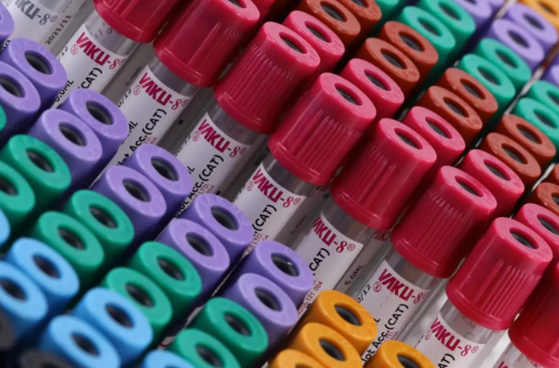
Course contact: Your Nurse Educator is your first point of contact. Then Erika Lackey-Ruwald Nurse Consultant - Practice and Performance Improvement, Manawa Awhi | Nursing Development Unit

Method: Skill validation

Frequency: Once

Category: General

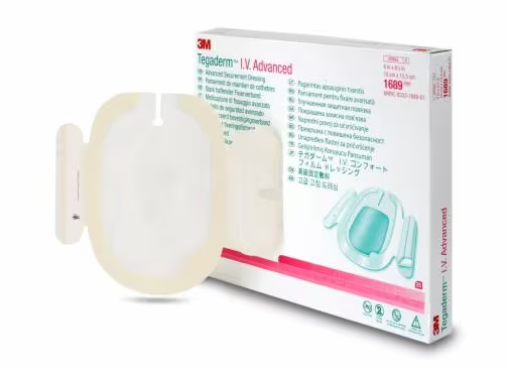
Whakaminenga | Who is this for: All staff who need Central Line Dressing Change Skill Validation in Te Toka Tumai Auckland

Takawā | Time: 30 minutes

Course contact: Your Nurse Educator is your first point of contact. Then Erika Lackey-Ruwald Nurse Consultant - Practice and Performance Improvement, Manawa Awhi | Nursing Development Unit

Method: Skill validation

Frequency: Once

Category: General

Whakaminenga | Who is this for: All staff who need Central Line Removal Skill Validation in Te Toka Tumai Auckland

Takawā | Time: 30 minutes

Course contact: Your Nurse Educator is your first point of contact. Then Erika Lackey-Ruwald Nurse Consultant - Practice and Performance Improvement, Manawa Awhi | Nursing Development Unit

Method: Skill validation

Frequency: Once

Category: General

Whakaminenga | Who is this for: All staff who care for patients with CVADs as part of their clinical role

Course contact: Your Nurse Educator is your first point of contact. Then Erika Lackey-Ruwald Nurse Consultant - Practice and Performance Improvement, Manawa Awhi | Nursing Development Unit

Method: Blend of eLearning and Skill Validations

Frequency: Once

Technology: Headphones or earbuds if completing eLearning in a shared workspace

Category: General

Whakaminenga | Who is this for: All staff who care for patients with CVADs as part of their clinical role

Takawā | Time: 30minutes

Course contact: Your Nurse Educator is your first point of contact. Then Erika Lackey-Ruwald Nurse Consultant - Practice and Performance Improvement, Manawa Awhi | Nursing Development Unit

Method: eLearning

Frequency: Once

Technology: Headphones or earbuds if completing eLearning in a shared workspace

Category: General

Target audience: Clinical Coder
Time allocation: approx. 2 min.
Completion criteria: complete ALL mandatory activities (refer to Course Completion Status block on the right)
Contact: Email us MCIS@adhb.govt.nz

This course updates Clinical Coders' skills in coding Cardiothoracic surgery events.

The enrolment key is available from the course tutor.

Category: Clinical Coding

This course updates clinical coders skills in coding ENT and ORL events.

The enrolment key is available from the course tutor.

Category: Clinical Coding

This course updates Clinical Coders' skills in coding Neurosurgery events.

The enrolment key is available from the course tutor.

Category: Clinical Coding

Target Audience: Auckland DHB Employees

The ability to have effective coaching conversations is a critical skill for managers, clinical leaders, nurse educators and all those involved in developing others. 

Duration: 8 hours face-to-face training

Learning Outcomes

By the end of the programme you should have:

  • an understanding of what coaching is
  • explored the mindset needed for effective coaching
  • identified your personal challenges around coaching
  • explored and experienced empathic listening
  • practised a strategy for effective questioning
  • used a coaching model to guide coaching conversations

Category: General

To ensure correct operation of the instrumentation within the laboratory it is important to have the knowledge and understanding of how the instrumentation operates and works.  You are here to get a General understanding of the ISE, Photometric & Immunoassay Modules of the Cobas 8000 Analyser System.

Who is this for: Automation Laboratory Support Services

Time: 30 minutes

For Technical support contact see Koawtea Learning Help page

For Learning content contact  Jacquie Martin or Shugo Kawamoto 

Category: LabPlus

To ensure correct operation of the instrumentation within the laboratory it is important to have the knowledge and understanding of how the instrumentation operates and works.  You are here to get a General understanding of the Cobas Integrated Automation System.

Who is this for: Automation Laboratory Support Services 

Time: 30 minutes

For Technical support contact see Koawtea Learning Help page

For Learning content contact  Jacquie Martin or Shugo Kawamoto 

Category: LabPlus

It is expected that clinical staff of all levels will complete this mandatory eAssessment which replaces the quality & legal session run on the Clinical Half Day.

This eAssessment is based on the TEN Rights outlined in the Code and is designed to test your understanding of how the code is applied in a clinical setting.

This eAssessment contains 15 questions. Each question is based on a learning objective. Questions are in a multiple choice format. The allocated time for the test is 20 minutes. Pass mark 90%.

The Code (The HDC Code of Health and Disability Services Consumers' Rights Regulation 1996) gives “rights” to all consumers, and places “duties” (obligations) on people and organisations providing services.

It covers a wide range of providers (whether public or private). The Commissioner’s jurisdiction is restricted to the quality of care; it does not cover issues of funding or entitlement to service.

Kia ora! The overall aim of this course is to share with you some resources regarding the Code of Rights policy at Te Toka Tumai, Auckland DHB. This is in addition to the Code of Rights course. 


The expectations of this course are that you will: 

  • read the policy 
  • access any resource page(s) on Hippo 
  • complete the self-evaluation section  - this acknowledges that you have read the policy/guideline and have had an opportunity to discuss any questions you have with your preceptor/nurse educator or manager 


Kia ora! 

A Code Orange is Auckland District Health Board’s (Auckland DHB) emergency call for assistance to limit or eliminate a risk when staff feel concerned about their own safety, the safety of a patient, others or the environment, or when an incident is impeding or obstructing the provision of clinical care.

The Code Orange policy defines Auckland DHB's expectations and management of situations where staff have identified that their safety or the safety of others (including the environment) is at risk.


The expectations of this course are that you will: 

  • read the policy 
  • access any resource page(s) on Hippo 
  • complete the self-evaluation section  - this acknowledges that you have read the policy/guideline and have had an opportunity to discuss any questions you have with your preceptor/nurse educator or manager 

This course, which was previously known as Code Black, is for all Te Toka Tumai Auckland workers at all locations. Our Code Purple response is how we respond when there is a critical security incident (such as an abduction, firearm, an offensive weapon (non-firearm), or a chemical, biological, radioactive or explosive device or substance) requiring emergency services support. 

This course will educate you so that you know what to do during such an event.  

Before starting this course you should have completed the mandatory Security for Safety awareness module. 


Category: Health & Safety

Target audience: Community / High Risk Midwife
Time allocation: approx. 1 hour
Completion criteria: complete ALL mandatory activities (refer to Course Completion Status block on the right)
Contact: Email us MCIS@adhb.govt.nz

Computer Tomography (CT) is a significant part of the Radiation Therapy planning and delivery process. 

This course provides an essential introduction to the CT scanning process and the associated emergency procedures in accordance with ADHB RT best practice

The intended audience is all qualified Radiation Therapists and Radiation Therapy students.   

This course provides the essential knowledge to safely operate the Radiation Therapy Cone Beam Computer Tomography equipment in accordance with ADHB RT best practice.

Audience:
All qualified RTs and third year RT students

Cone Beam CT imaging of Radiation Therapy patients allows assessment of patient setup and anatomical positioning of treatment targets and critical structures.  This course provides the essential knowledge to assess CBCT images and outlines the decision making process after reviewing CBCT images. 

Audience: All qualified Radiation Therapists and third year RT students.  Participants completing this course should be able to:

  • Assess CBCT images for contour alignment and organ position in comparison to the initial planning CT scan.
  • Make decisions about appropriateness of factors relating to daily treatment based on CBCT images

About the course:                                                                

This mandatory learning is for all clinical staff work in perioperative area at Te Whatu Ora Te Toka Tumai Auckland. 

Upon completion of this course, you will be able to:

  • Familiarize yourself with the "Count Policy for Surgical Procedures" at Te Toka Tumai Auckland
  • Understand your professional responsibilities when participating in surgical counts   
  • Understand the general principles of surgical counts
  • Understand the protocol for managing count discrepancies 
  • Prevent the potential for patient harm due to retained foreign bodies  
Category: Operating Rooms

The overall aim of this course is to familiarise clinicians to the surgical count policy at Te Toka Tumai Auckland. 

Who is this for: Surgeons working within operating rooms 
Time: 20 mins

Category: Operating Rooms

Kia ora! The overall aim of this course is to share with you some resources  to guide best practice when caring for patients with suspected or confirmed COVID-19. 


The expectations of this course are that you will: 

  • have already completed the Infection Control training on Ko Awatea LEARN
  • know how to access the COVID-19 resources on Hippo 
  • discuss with your preceptor/nurse educator/manager the current best practice for the care and management of patients with suspected or confirmed COVID-19 in your clinical setting 
  • verify your completion of the associated competency

About: Basic Life Support training for adults, children and infants, including use of AED. Participants working in selected clinical areas will also learn airway management and the use of manual defibrillator.
Mā wai tēnei / Who is this for: All staff (clinical & non-clinical) who works in Level 3/Adult Cardiology services in Te Toka Tumai.
Prerequisites: Patient Deterioration must be completed within 3 months prior to attending this course.
Frequency: Annually.
Takawā / Time: 1.5 hours.
Course contact: Cheyann Scalabrini 

The Critical Te Tiriti Analysis workshop aims to strengthen the healthcare sectors engagement with Te Tiriti. Critical Tiriti Analysis (CTA) is a tool to inform the development of policy, review policy/curriculum/competencies, analysis of qualitative research data to check Te Tiriti compliance. It can be used retrospectively or prospectively.

Who is this for: This workshop will be most useful for those who work in roles that involve policy/system/process design or re-design. 
Time: 7 hours
Course contactOrganisational Development Te Toka Tumai
Method: face-to-face
Frequency: once

Target audience: CRO
Time allocation: approx. 2 min.
Completion criteria: complete ALL mandatory activities (refer to Course Completion Status block on the right)
Contact: Email us MCIS@adhb.govt.nz

Intended audience: nursing staff working CV ICU and CV CCU

About this course: Couterpulsation therapy

Agenda: By the end of the study day, we really hoping all attenders is able to adjust the timing and make the most out of the balloon pump to achieve the demand and supply need from the myocardium.

This module must be completed after attending the CVICU Prismaflex Study day.

This workbook was compiled by the Hemofiltration User Groups and CVICU Education Team for new users of the PRISMAFLEX and the SLEDD.  This book needs to be read prior to attending the theory day and practical day.  Questions in the tests will cover the contents of the workbook, including the protocols and recommended best practice.  The workbook will be yours to keep for future reference.

On the practical day, theory will not be covered.  It is a day to get some familiarity with the PRISMAFLEX & the SLEDD machine and how to run them.  However, should you have questions do not hesitate to ask them during the workshop. Good luck!

Kind Regards,

The Renal Replacement Groups


Cardiac arrest and other crisis events that occur in a cardiovascular intensive care unit must be managed with an understanding of the particular context of CVICU.

A series of crisis check-lists are used in emergency situations in CVICU.

This course provides the essential knowledge to locate resources and effectively manage these crisis situations in CVICU:

Cardiac arrest – covers check-lists 1,2,3 and 12

Emergency airway management – covers check-lists 6,7,8, 9 and 10

This E-learning was compiled by the Hemofiltration User Groups and CVICU Education Team for new users of the Slow Low Efficiency Daily Dialysis (SLEDD).  This module needs to be read prior to attending the practical day.  Questions in the tests will cover the contents of the workbook, including the protocols and recommended best practice. 

On the practical day, theory will not be covered. You will be expected to complete a closed book pre-test before attending the practical component of the day. The study day is a day to get some familiarity with the SLEDD machine and how to run them.  However, should you have questions do not hesitate to ask them during the workshop. Good luck!

Kind Regards,

The Renal Replacement Group


Who is this for: Operation Managers at Te Whatu Ora Te Toka Tumai
Prerequisites: Please bring phone, paper and pen, a lap top that has access to Citrix and arrive at least 5 mins before scheduled start time.
Time: 1.5 to 2 hours max.

Method: face-to-face
Frequency: once

The overall aim of this course is provide basic risk management training on Datix - the electronic Enterprise Risk Register at Te Whatu Ora Te Toka Tumai.

Training includes how to:

  • get familiar and report and manage risks  
  • access dashboard and create your own reports

At the end of this course you will be able to use Datix to enter and manage all risks in your work area.  And where necessary, provide guidance and training to other colleagues on how to use Datix.


Category: Health & Safety

Who is this for: Other Staff at  Te Whatu Ora Te Toka Tumai
Prerequisites: Please bring phone, paper and pen, a lap top that has access to Citrix and arrive at least 5 mins before scheduled start time.
Time: 1.5 to 2 hours max.

Method: face-to-face
Frequency: once

The overall aim of this course is provide basic risk management training on Datix - the electronic Enterprise Risk Register at Te Whatu Ora Te Toka Tumai.

Training includes how to:

  • get familiar and report and manage risks  
  • access dashboard and create your own reports

At the end of this course you will be able to use Datix to enter and manage all risks in your work area.  And where necessary, provide guidance and training to other colleagues on how to use Datix.


Category: Health & Safety

Introduction 

The purpose of this course is to provide a learning opportunity for nursed working in DCCM to develop skills and insights to be able to Assess, Detect, Recognise, Manage and Prevent Delirium. This takes about 1 hour to complete. 


Category: DCCM
This course is for all DCCM staff who manage arterial lines, monitor arterial blood-pressure and perform arterial puncture logo here
Category: DCCM
Page: () 1 2 3 4 5 6 7 8 9 10 11 12 ()